Home & Renovation
How Much Paint Do You Need for a Room?
Calculate the wall area you will paint, subtract unpainted openings where appropriate, multiply by the number of coats, then divide by the paint’s coverage per gallon. Keep ceilings, trim and different paint products separate, and add any touch-up allowance explicitly.
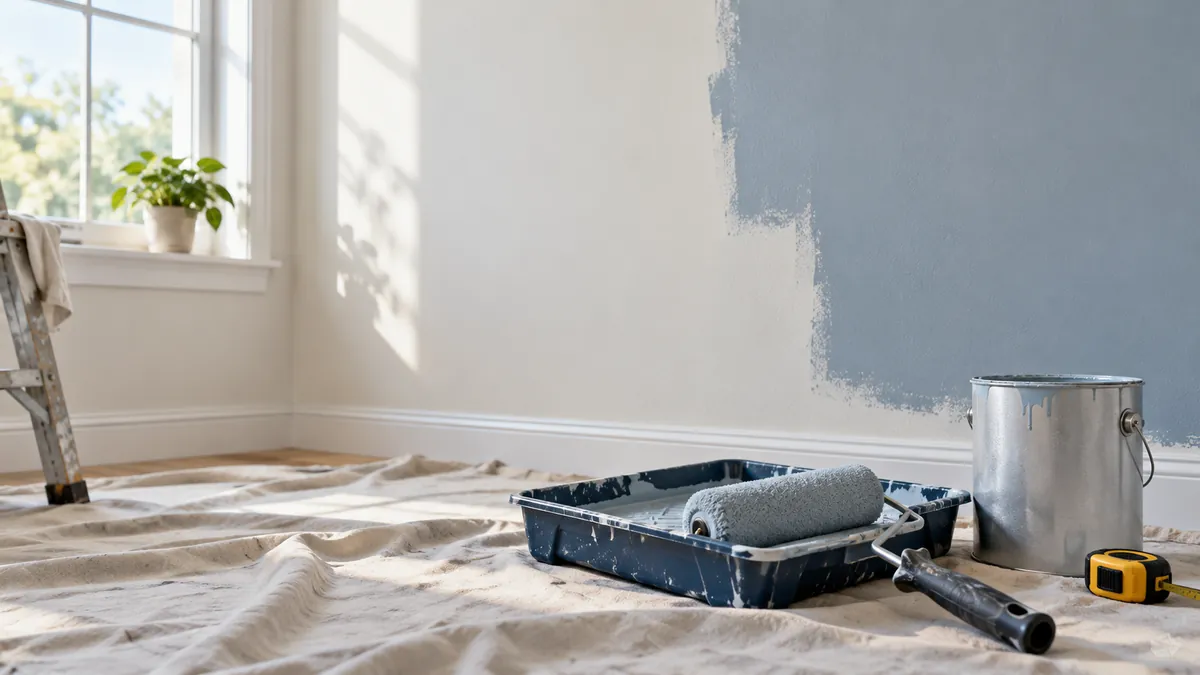
Measure wall area rather than floor area
Measure each wall’s length and the height of the surface to be painted. For a rectangular wall, area equals length × height. Add all the wall areas, using the same unit for every dimension. If all walls have one height, multiply the room’s perimeter by that height instead.
A 12-by-10-foot room has a 44-foot perimeter: 2 × (12 + 10). With 8-foot walls, its gross wall area is 44 × 8 = 352 square feet. The 120-square-foot floor area is not a substitute for this wall measurement.
For sloped or stepped walls, split the shape into rectangles and triangles. A triangular section is base × perpendicular height ÷ 2. Measure alcoves and returns separately if they will be painted; a simple room outline can miss those surfaces. Calculate a ceiling as its own area, especially when it uses a different paint or coat count.
Decide which openings to subtract
Subtract the area of doors and windows that will not receive the wall paint. Measure their actual dimensions rather than treating all openings as a standard size. Keep deductions consistent: do not subtract a whole opening and then omit a painted recess or return that belongs in your estimate.
Some rough estimates leave small openings undeducted as a modest buffer. That can be a deliberate shortcut, but the retained area then already contributes extra paint. Do not describe the result as an exact net wall area or count the same buffer again without explanation.
If doors, frames or baseboards use a separate finish, calculate that product separately. Combining wall paint and trim paint into one gallon total does not tell you how much of each product to buy.
Use coverage for the actual paint and surface
Coverage on a label is usually expressed as area per stated volume for one coat. Use the coverage for the product and application conditions you expect. A value in square feet per gallon cannot be combined directly with an area in square meters or a container sold in liters.
Net wall area = gross wall area − unpainted openings
Paint volume = net wall area × coats ÷ coverage per gallon
Volume with allowance = paint volume × (1 + allowance percentage ÷ 100)
Actual coverage depends on paint, surface texture, porosity, primer and application. A textured or absorbent wall may use more paint than a smooth prepared surface. Changing color can also affect the coats needed. Primer has its own coverage and purchase quantity; adding a finish coat does not automatically replace suitable preparation or primer.
Use the Paint Coverage Calculator after working out your net area. Its area field expects the area already measured and adjusted for openings. It multiplies by coats and divides by your entered coverage; it does not measure the room or subtract openings for you.
Worked example: two coats in a small room
Use the 352-square-foot gross wall area above. Assume one unpainted door measuring 3 × 7 feet and two unpainted windows, each 3 × 4 feet. Use an illustrative label coverage of 350 square feet per gallon per coat.
| Step | Calculation | Result |
|---|---|---|
| Door deduction | 3 × 7 | 21 sq ft |
| Window deduction | 2 × 3 × 4 | 24 sq ft |
| Net wall area | 352 − 21 − 24 | 307 sq ft |
| Two-coat coverage area | 307 × 2 | 614 sq ft |
| Paint needed | 614 ÷ 350 | About 1.7543 gallons |
| With 10% allowance | 1.7542857… × 1.10 | About 1.9297 gallons |
In this example, buying two whole gallons covers the calculated amount with the selected allowance. The calculator’s basic result is the unadjusted 1.7543 gallons, rounded upward to two when buying whole gallons. The optional 10% is a separate manual planning choice, not an automatic calculator adjustment.
Separate touch-up reserve from purchase rounding
Rounding to a container size creates a surplus, but it does not guarantee a specific reserve. Here, two gallons exceed the base estimate by about 0.246 gallon. After allowing the proposed 10%, the remaining difference is much smaller. Check the actual container sizes available and whether the same batch and finish will be kept for touch-ups.
Avoid applying coats twice, entering a ceiling area as wall area, or using the coverage for primer as the coverage for finish paint. Keep the calculated volume unrounded until choosing containers. If the result sits near a purchase boundary, review measurements and label assumptions rather than relying on early rounding to avoid another can.
For a wider project, turn the chosen paint quantities and actual store prices into a purchase budget. The monthly savings guide explains how to separate existing funds from the amount still needed; paint coverage itself does not estimate labor or other decorating costs.
Use the calculator
Paint Coverage Calculator
Estimate how much paint you need.